Epoxy, polyaspartic, and polyurea get lumped together as "resinous flooring" in a lot of sales conversations, but they cure differently, resist different things, and fit different commercial scenarios. Picking the wrong one doesn't mean your floor fails immediately — it means it fails five years earlier than it should have.
100% solids epoxy is the standard base layer for most commercial systems because it self-levels well, builds film thickness efficiently, and bonds strongly to properly prepared concrete. Its weakness is cure time — a full cure can take 3–7 days depending on temperature and humidity — and UV sensitivity, which causes amber discoloration in sunlit areas over time. That makes it a strong choice for interior warehouse, manufacturing, and retail floors, and a poor choice for anything that sees direct sunlight long-term.
Polyaspartic cures in hours, not days — a floor can often take foot traffic the next day and light vehicle traffic within 48 hours. It's also UV-stable, so it holds its color and gloss in sunlit areas where epoxy would yellow. The tradeoff is a shorter working (pot) time during installation, which means it takes a more experienced crew to install correctly at scale. We use it heavily on showroom floors, retail spaces, and any project where minimizing downtime is the priority.
Polyurea is more flexible than epoxy or polyaspartic once cured, which lets it bridge hairline cracks instead of telegraphing them back through the topcoat. It also tolerates a wider temperature range during application and handles thermal cycling well. That combination makes it the right call for parking structures and any exterior or semi-exterior deck exposed to South Florida humidity and heat.
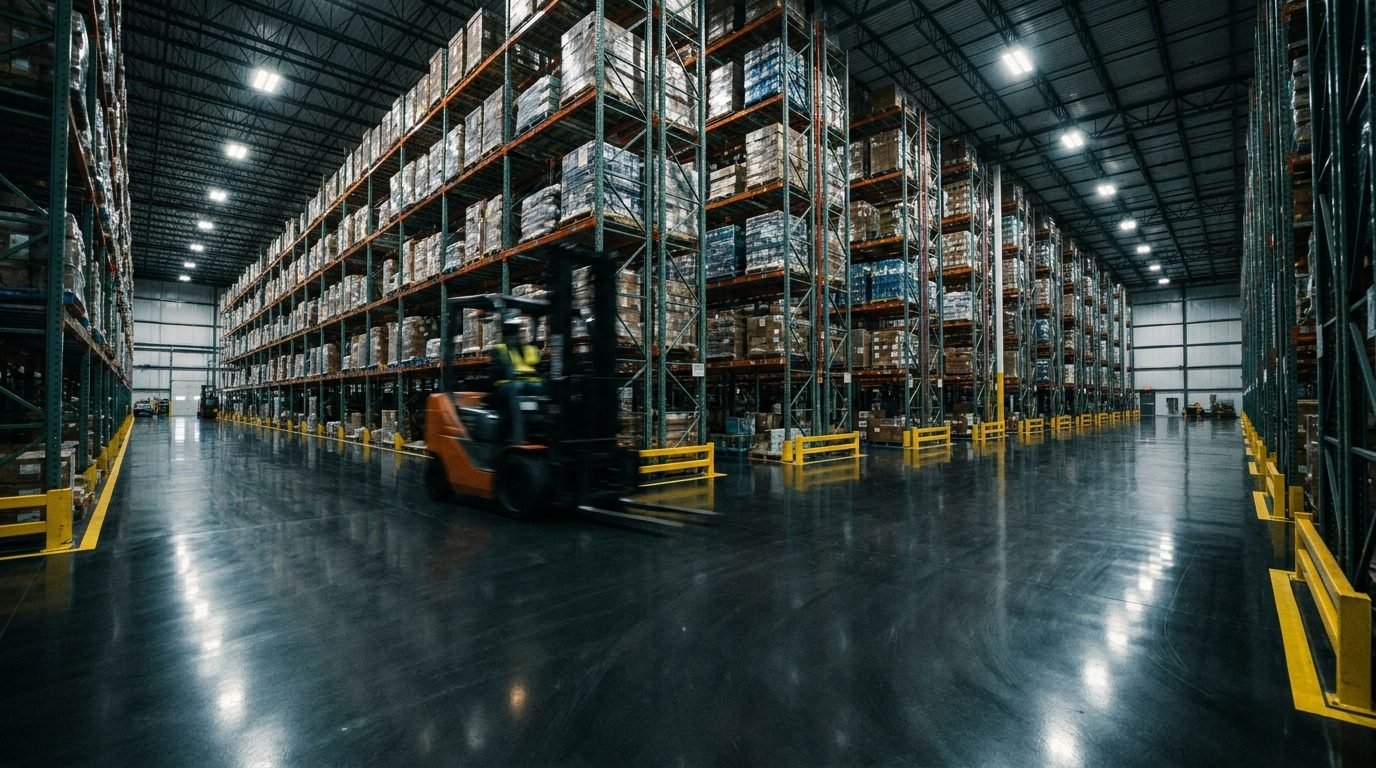
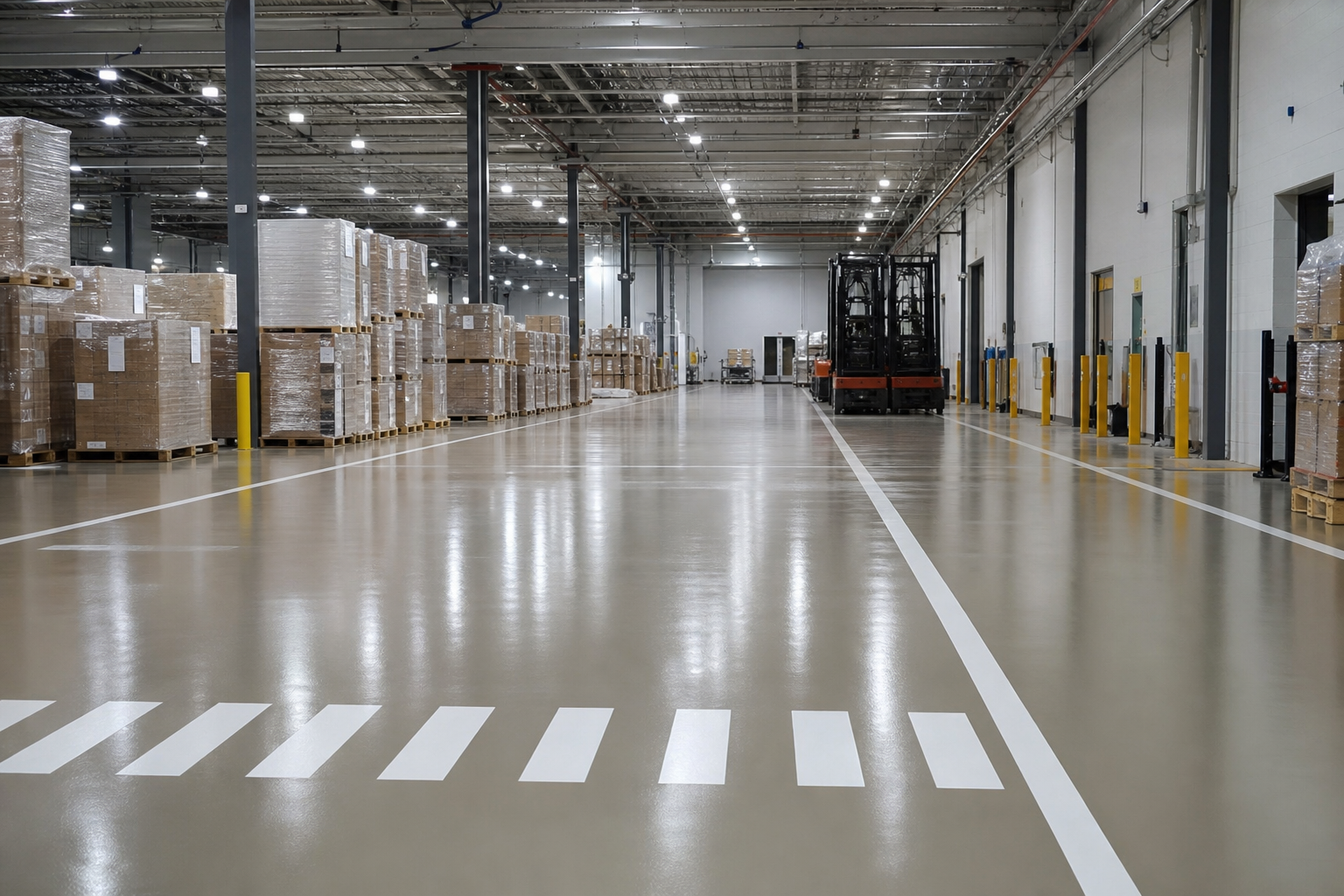
In practice, most commercial systems we install aren't a single product — they're a base coat of one chemistry and a topcoat of another, chosen to balance cost, cure time, and the specific exposure your floor sees. A warehouse floor might get an epoxy base with a polyaspartic topcoat for UV stability at loading dock doors. A parking deck gets polyurea specifically for its crack-bridging flexibility. We walk your facility, ask about traffic and exposure, and spec accordingly — not from a single default product line.
Free on-site estimate for commercial flooring projects throughout Palm Beach Gardens, Jupiter, Wellington, Lake Worth Beach, Boynton Beach & greater West Palm Beach. Same-day quote. Warranty terms supplied in writing on every installation.
Get Your Free Estimate