The amount of downtime a commercial floor project causes is mostly determined by decisions made before the crew ever shows up — which system you choose, how the work is phased, and when it's scheduled. Facilities that plan for this upfront routinely cut disruption by more than half compared to an unplanned single-phase closure.
Polyaspartic and MMA systems cure dramatically faster than standard epoxy — often walkable within a day instead of a week. They cost somewhat more per square foot, but for a facility where downtime has a real daily revenue cost, the math frequently favors the faster system even at the premium.
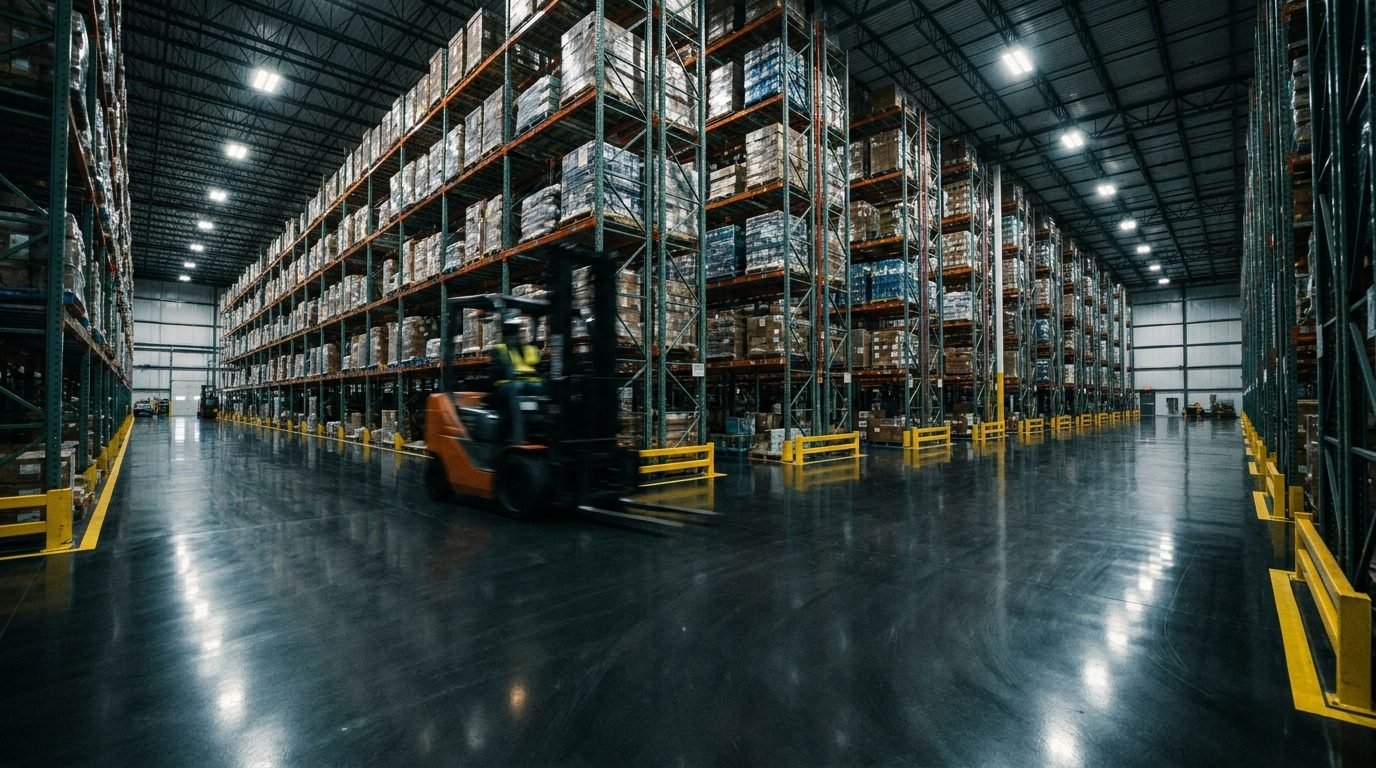
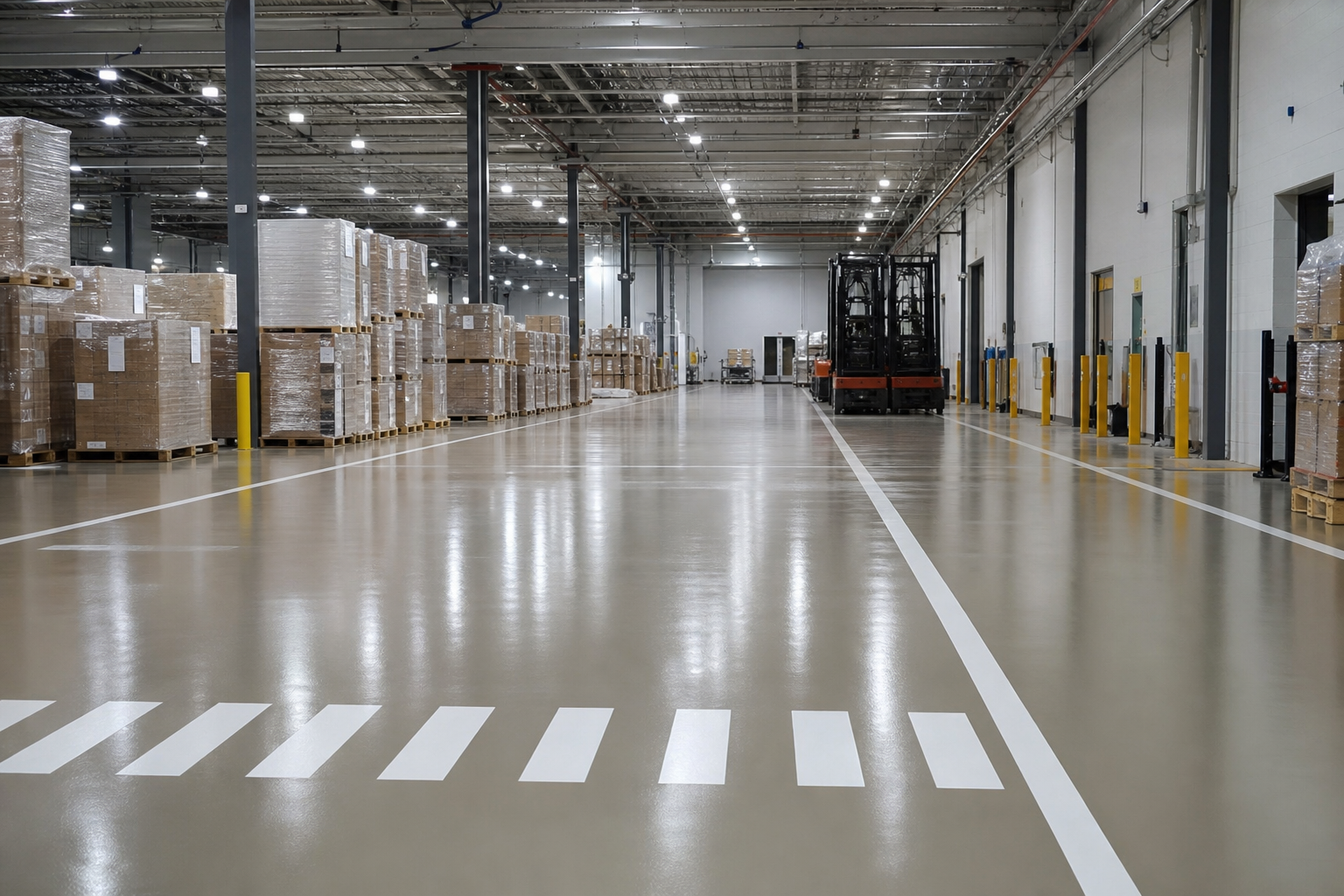
Coating one zone, aisle, or bay at a time — rather than the whole facility at once — means the rest of the operation keeps running throughout. This is standard practice for warehouses, dealerships, and multi-room medical or office buildings, and it's something to raise explicitly during your estimate walkthrough.
Overnight and weekend installation windows exist specifically for businesses that can't absorb any daytime closure — restaurants, retail stores, and medical practices most commonly use this option. It doesn't apply to every project (large industrial floors sometimes need continuous multi-day work regardless), so it's worth discussing early, not assuming.
Light foot traffic, full foot traffic, and full vehicle/equipment loading typically return at different points in the cure schedule, not all at once. Knowing that sequence in advance lets you stage which parts of your operation resume first instead of waiting for one single "floor's done" moment.
Free on-site estimate for commercial flooring projects throughout Palm Beach Gardens, Jupiter, Wellington, Lake Worth Beach, Boynton Beach & greater West Palm Beach. Same-day quote. Warranty terms supplied in writing on every installation.
Get Your Free Estimate