
tel
(317) 509-9873
Technical Guide 2026-07-30

Commercial Concrete Moisture Testing: Why It's Non-Negotiable Before Coating

The Test Most Often Skipped

Moisture testing is the single most commonly skipped step in commercial floor coating installation — it takes time, it can delay a project by 24–72 hours to get accurate readings, and a floor that looks and feels perfectly dry can still be transmitting enough vapor to eventually lift a coating. Skipping it is the single most common cause of early coating failure we diagnose on facilities we didn't originally install.

Why On-Grade Slabs Are the Real Risk

Concrete slabs poured directly on or near grade — the vast majority of Florida warehouse, retail, and light-industrial construction — sit in continuous contact with soil moisture. Florida's clay-heavy soils hold and transmit that moisture particularly well, which pushes vapor up through the slab continuously, regardless of how the surface looks or feels to the touch.

The Two Standard Test Methods

  • Calcium chloride testing measures the rate of moisture emission from the slab surface over a set period, expressed in pounds per 1,000 square feet per 24 hours. It's a well-established, relatively quick method, though it only measures the top portion of the slab.
  • Relative humidity (RH) probe testing measures moisture deeper within the slab using embedded probes, generally considered more representative of the slab's actual internal condition, and is increasingly the preferred method for commercial projects.

What the Results Actually Change

Readings within acceptable range for the coating system being used mean standard installation can proceed. Elevated readings don't necessarily mean coating is impossible — they usually mean a moisture-mitigating primer, rated for the specific vapor emission level measured, needs to go down first. Skipping that step on a slab with elevated readings is exactly what leads to bubbling and delamination months or years later.

Why This Should Never Be an Afterthought

A legitimate commercial flooring contractor tests before quoting a final price, not after installation problems appear — because the results can change which primer, and sometimes which overall system, is appropriate. If a contractor's estimate doesn't mention moisture testing at all, that's worth asking about directly.

Frequently Asked Questions

Calcium chloride testing typically requires the test to sit for about 60–72 hours for an accurate reading; RH probe testing timelines vary but are generally in a similar range. Building this into the project timeline upfront avoids it becoming a surprise delay.
For on-grade or below-grade slabs, yes, essentially always — the risk of skipping it far outweighs the modest cost and time of testing. Elevated slabs with a well-documented history sometimes warrant less scrutiny, but testing remains the safer default.
It usually doesn't mean coating is impossible — it typically means a moisture-mitigating primer rated for the measured emission level is required before the standard system goes down.

Ready to Get Started?

Free on-site estimate for commercial flooring projects throughout Palm Beach Gardens, Jupiter, Wellington, Lake Worth Beach, Boynton Beach & greater West Palm Beach. Same-day quote. Warranty terms supplied in writing on every installation.

Get Your Free Estimate
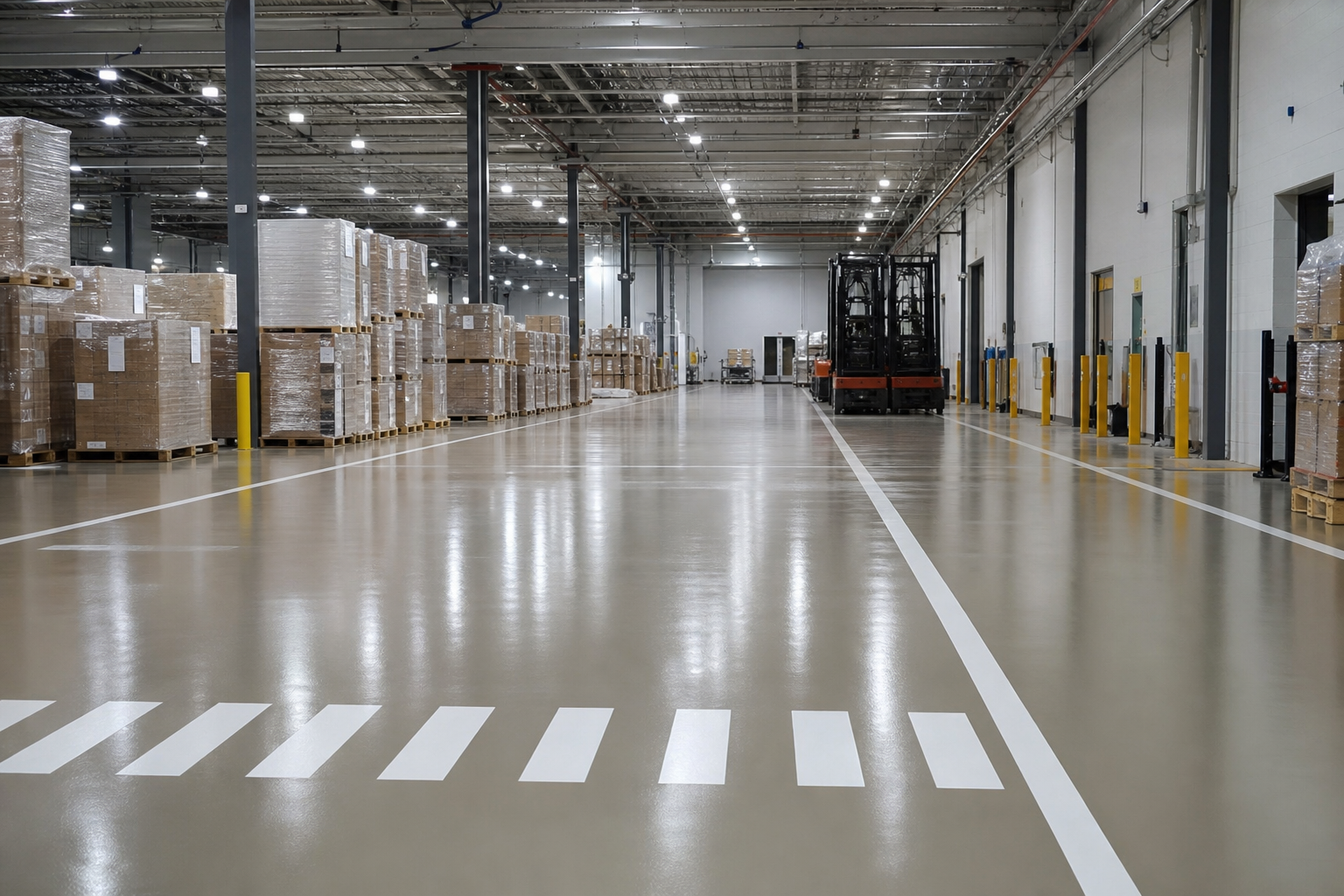
Commercial warehouse floor coating designed for equipment traffic
Use the written scope to match the finish and floor conditions.
Warehouse floor striping used to organize traffic paths
Preparation, access, and intended use shape the recommendation.
Website Designed & Built By
Joe Design Group